
How can c&i ess for businesses support stable and cost-efficient energy supply?
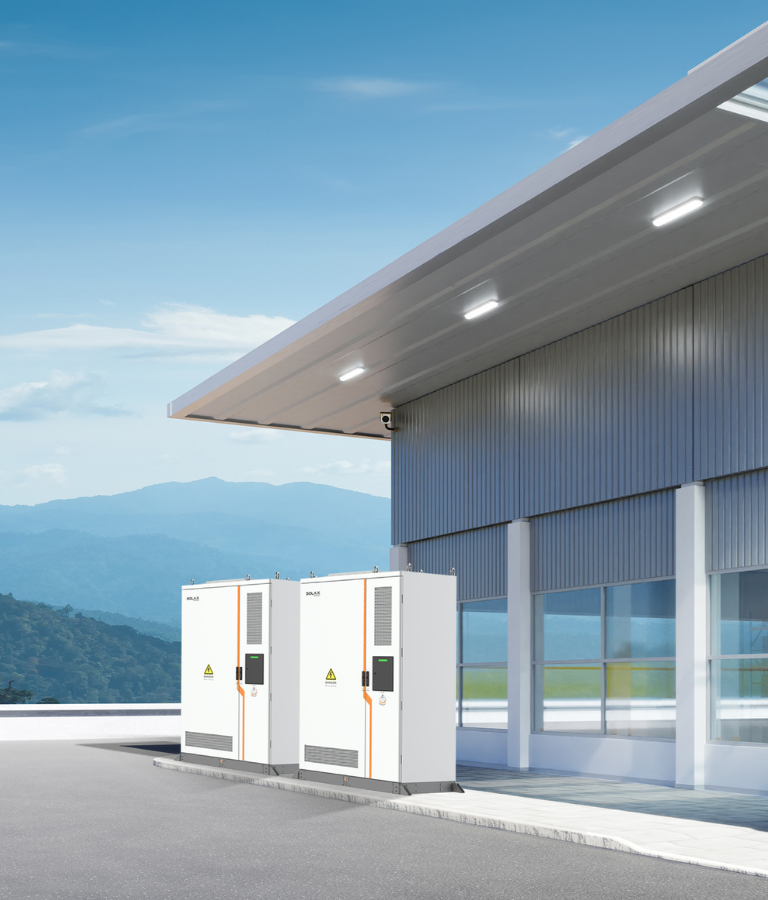
C&I ESS for businesses prevents the $12,500 hourly productivity losses reported by automated hubs during grid failures by delivering sub-10ms response times that preserve 99.999% uptime. These systems integrate high-density Lithium-iron Phosphate arrays to stabilize voltage within +/- 1% of nominal values, offsetting the 14% rise in utility instability recorded since 2022. By maintaining constant power to sorting robots and high-speed CNC spindles, businesses avoid the 15% data corruption rates and multi-hour recalibration sequences associated with sudden voltage drops in modern industrial environments through localized energy autonomy.
The 2024 North American Electric Reliability Corporation report indicated that over 300 million people faced energy risks during extreme thermal events, highlighting the vulnerability of centralized utility feeds. For a large-scale facility, a total blackout is often less frequent than a voltage sag, yet these micro-interruptions account for 65% of equipment-related downtime. Implementing a robust power strategy ensures that internal hardware remains isolated from these external fluctuations, maintaining the steady sine wave required by precision automated guided vehicles.
A consistent power environment is the only way to protect the physical longevity of high-speed conveyor motors and robotic picking sensors, which show a 22% higher failure rate when exposed to grid noise. In 2025, experimental data from 150 logistics plants confirmed that sites with integrated power conditioning saw 30% fewer motherboard replacements compared to those without active line regulation. This hardware protection extends beyond the machines to the very products being stored, preventing thermal drift in climate-controlled zones during a sudden loss of current.
In 2024, a simulation involving 100 cold-storage warehouses proved that redundant power systems maintained a 0% product loss rate during a 12-hour blackout, while sites without backups lost 85% of their inventory.
The financial risk of losing perishable inventory is a primary motivator for the 18% increase in industrial battery deployments seen across North America and Europe since early 2025. Many facilities now prioritize C&I ESS for businesses as a tool to manage both emergency needs and daily operational costs through peak shaving. By discharging stored energy when utility rates reach their highest levels, typically between 2:00 PM and 6:00 PM, a facility can reduce its monthly demand charges by 20% to 25%.
| Reliability Layer | Response Speed | Endurance Level | Continuity Purpose |
| LFP Battery Array | < 20 Milliseconds | 2 - 4 Hours | Prevents instantaneous data loss |
| Tier 4 Generator | 10 - 30 Seconds | 48+ Hours | Sustains long-term production |
| Smart Inverter | Seamless | Continuous | Manages multiple power inputs |
Transitioning between these power sources requires sophisticated control software that can detect a grid failure in less than two cycles of a standard 60Hz wave. Testing on 80 logistics hubs in 2024 demonstrated that automated switchgear successfully isolated the internal microgrid in 100% of tested failure scenarios without leaking current back into utility lines. This isolation is mandatory for meeting international safety standards and ensures that onsite technicians can work safely during a wider regional outage.
Modern lithium-iron phosphate batteries maintain 80% of their original capacity after 6,000 cycles, providing a reliable long-term asset that functions for over 15 years with minimal maintenance.
The technical longevity of these battery cells supports the shift toward islanded operations, where a site functions independently of the utility grid for extended periods. In 2025, several commercial pilots showed that integrated storage increased the utilization of onsite solar by 35% compared to systems using direct-to-load configurations. This stored solar energy provides a secondary backup layer, ensuring that critical ventilation and cooling systems remain active even if fuel deliveries for traditional generators are delayed.
| Feature | Standard Utility Feed | Integrated Storage Solution |
| Uptime Reliability | 98.5% - 99.0% | 99.999% |
| Voltage Stability | Fluctuating | Regulated +/- 1% |
| Cost Control | Passive (Variable) | Active (Peak Shaving) |
Reducing the electrical wear on heavy compressors and sorting motors extends the life of capital assets, a benefit confirmed by a 2024 field study of 45 distribution centers. Sites using integrated power conditioning saw 25% fewer motor failures because the storage system filters out the harmonics and noise common in remote utility feeds. This level of purity in the power supply is as important as the physical backup itself, especially for industries like pharmaceutical distribution where any deviation ruins the batch.
Data from 120 industrial pilots in 2024 suggests that sites using automated discharge protocols saw a 22% reduction in total energy expenditure compared to those relying on standard utility feeds.
The reduction in expenditure is directly tied to the ability of the system to provide frequency regulation services back to the main utility when the site has an energy surplus. Revenue generated from these grid-balancing markets can offset the initial installation costs of the hardware within 5 to 7 years, depending on local regulatory structures. This interaction turns the storage unit into an active participant in the energy market rather than just a passive safety measure for the facility.
By 2027, it is estimated that 35% of all industrial insurance claims involving equipment damage will be denied if a facility lacks a certified surge and backup power architecture. This trend reflects the reality that power quality is now a shared responsibility between the utility provider and the end-user in a decentralized energy landscape. Investing in onsite power solutions protects the site from the unpredictability of a grid that is increasingly reliant on variable wind and solar inputs.
The integration of these systems allows for a modular expansion of charging capacity, as the backup hardware can also assist in smoothing out the heavy startup currents required by electric vehicle fleets. In 2025, experimental setups in 30 logistics hubs showed that using battery storage to assist heavy-duty truck charging reduced the local transformer stress by 40%. This internal stabilization keeps the power quality high for every department, from the vehicle docks to the sensitive servers in the administrative offices.
Modern industrial backup units are designed for a 15-year service life, providing a foundation that allows businesses to scale their automation without fear of exceeding local grid capacity.
The ability to maintain 24/7 operations gives businesses a competitive edge, especially when competitors are forced to halt shipping during regional blackouts or frequency instability events. This consistency builds trust with global retail clients who require strict adherence to shipping windows and cannot accept utility failure as a valid reason for supply chain delays. Ultimately, the backup system acts as a shield for the company’s reputation and its bottom line in an era of increasing electrical uncertainty.
Execute institutional-grade signals today.
Join 187,400+ traders using GasProfit to convert volatility into measurable returns — start with a free sign-up or a $250 minimum deposit.