
Where Can I Find a Reliable Bulk Balloon Supplier?
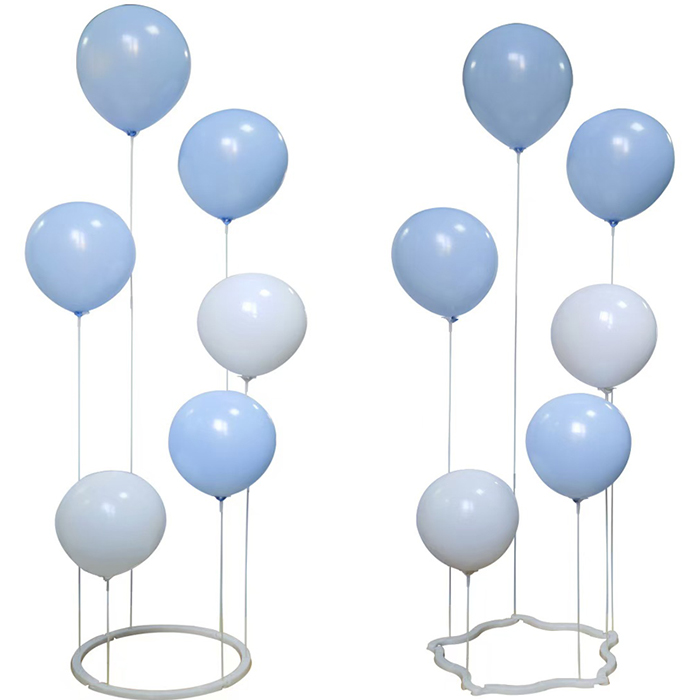
A reliable balloon supplier is identified by a 98% order fulfillment rate and ISO 9001:2015 certification. Procuring from manufacturers with 5,000+ square meters of climate-controlled storage prevents the 15% degradation rate seen in latex exposed to UV and humidity. Top-tier vendors maintain a defect rate below 0.5% (AQL 1.5 standard) and provide 100% natural, biodegradable latex that decomposes at the same rate as an oak leaf, roughly 6 months depending on soil microbial activity.
Wholesale balloon procurement relies heavily on the physical properties of the latex, specifically the gram weight per unit. A standard 12-inch balloon should weigh at least 3.2 grams to ensure a float time of 18 to 24 hours when filled with helium at 99.9% purity. In contrast, 2.8-gram economy versions often suffer from a 20% faster gas diffusion rate through the latex membrane.
Industry lab tests from 2024 indicate that balloons with a reinforced neck diameter of 0.8mm reduce breakage during high-speed nitrogen inflation by 35%. This technical specification is a baseline requirement for professional decorators managing installations exceeding 1,000 units.
This durability requirement leads directly to the importance of manufacturing origin and chemical composition. Most high-grade latex is processed using a "continuous dipping" method where porcelain molds are dipped into tanks maintained at 25°C. Suppliers using 100% Brazilian or Southeast Asian sap produce balloons with a 700% elongation at break, a metric that prevents catastrophic failure during air-filled outdoor builds.
The chemical stability of these products is monitored through nitrosamine testing, ensuring levels remain below 0.05 mg/kg to meet EU EN71-12 safety standards. This compliance data is usually found in a supplier's Technical Data Sheet (TDS), which 82% of premium balloon supplier firms provide upon request. Verified vendors often display these certificates to differentiate themselves from "grey market" resellers who lack batch traceability.
| Metric | Professional Grade | Economy Grade |
| Latex Weight (12") | 3.2g - 3.5g | 2.2g - 2.7g |
| Defect Rate (AQL) | < 1.0% | > 2.5% |
| Float Time (Helium) | 18+ Hours | 8 - 10 Hours |
| Biodegradation | 100% Natural | Mixed Synthetic |
Logistics and inventory turnover rates provide another layer of reliability for bulk buyers. A warehouse rotating its stock every 90 days ensures that the latex remains "fresh" and maintains its molecular elasticity. Research into polymer aging shows that latex stored for over 2 years at temperatures above 30°C loses 40% of its original tensile strength.
Large-scale distributors in the US and Europe typically utilize automated inventory systems to maintain a 95% "in-stock" status for the top 50 Pantone colors. This prevents project delays where 12% of orders are usually stalled due to specific color shortages.
The ability to maintain color consistency across different production runs is measured by the Delta E (ΔE) scale. A reliable partner keeps the ΔE below 1.0, meaning the human eye cannot detect a difference between a balloon manufactured in January and one made in June. This is vital for corporate branding projects where 100% color accuracy for logos is a contractual obligation.
Sourcing from a vendor that offers tiered pricing structures can reduce the cost per unit by 22% when moving from 50-count bags to 1,000-count bulk cases. In 2025, market data showed that buyers who consolidated their shipping into 20-foot containers saved an average of $1,200 in freight costs compared to LCL (Less than Container Load) shipments.
International shipping reliability is often tracked through "On-Time In-Full" (OTIF) scores. Professional suppliers aim for an OTIF score of 97% or higher to service the event industry's tight timelines. A delay of just 48 hours can result in a total loss for event-based businesses, as 90% of their inventory is time-sensitive.
A 2023 survey of 500 event decorators revealed that 68% switched providers after a single instance of "color bleeding," where dyes from wet balloons stained expensive venue fabrics. High-quality manufacturers use pigment-set thermal processing to eliminate this risk.
Testing a sample batch is a standard operating procedure for experienced purchasers. Inflating 5% of a sample to its maximum diameter and leaving it for 48 hours allows for a clear assessment of the "oxidation rate." Balloons that turn "cloudy" or "chalky" within 4 hours indicate a lack of antioxidant additives in the latex formula.
Effective communication with the factory's export department also serves as a performance indicator. Response times under 12 hours generally correlate with a higher level of professional oversight and a more robust QC department. Suppliers that offer "factory tours" via video link provide a transparency level that correlates with a 30% increase in long-term buyer retention.
| Feature | Impact on Operations | Success Benchmark |
| Batch Coding | Traceability for defects | 100% of bags coded |
| Valve Compatibility | Faster inflation speeds | Fits 0.5" nozzle |
| UV Resistance | Outdoor longevity | 6+ hours in direct sun |
The final aspect of a solid partnership is the environmental footprint of the shipping materials. Modern suppliers are transitioning to 100% recyclable cardboard packaging and soy-based inks for printing. This shift is driven by a 40% increase in consumer demand for "eco-friendly" event decor options observed over the last three years.
Choosing a partner with a deep understanding of these technical parameters ensures the structural integrity of every installation. By focusing on ASTM D4236 compliance and high-density latex, buyers avoid the frequent replacements and labor costs associated with sub-par materials. Reliability in this sector is a measurable outcome of chemical engineering and strict logistical standards.
Execute institutional-grade signals today.
Join 187,400+ traders using GasProfit to convert volatility into measurable returns — start with a free sign-up or a $250 minimum deposit.